How to Price the Documentation Deliverable on Client Engagements
Documentation is the most under-priced deliverable in a client engagement. Three pricing models close the gap, each with a different margin and renewal profile.

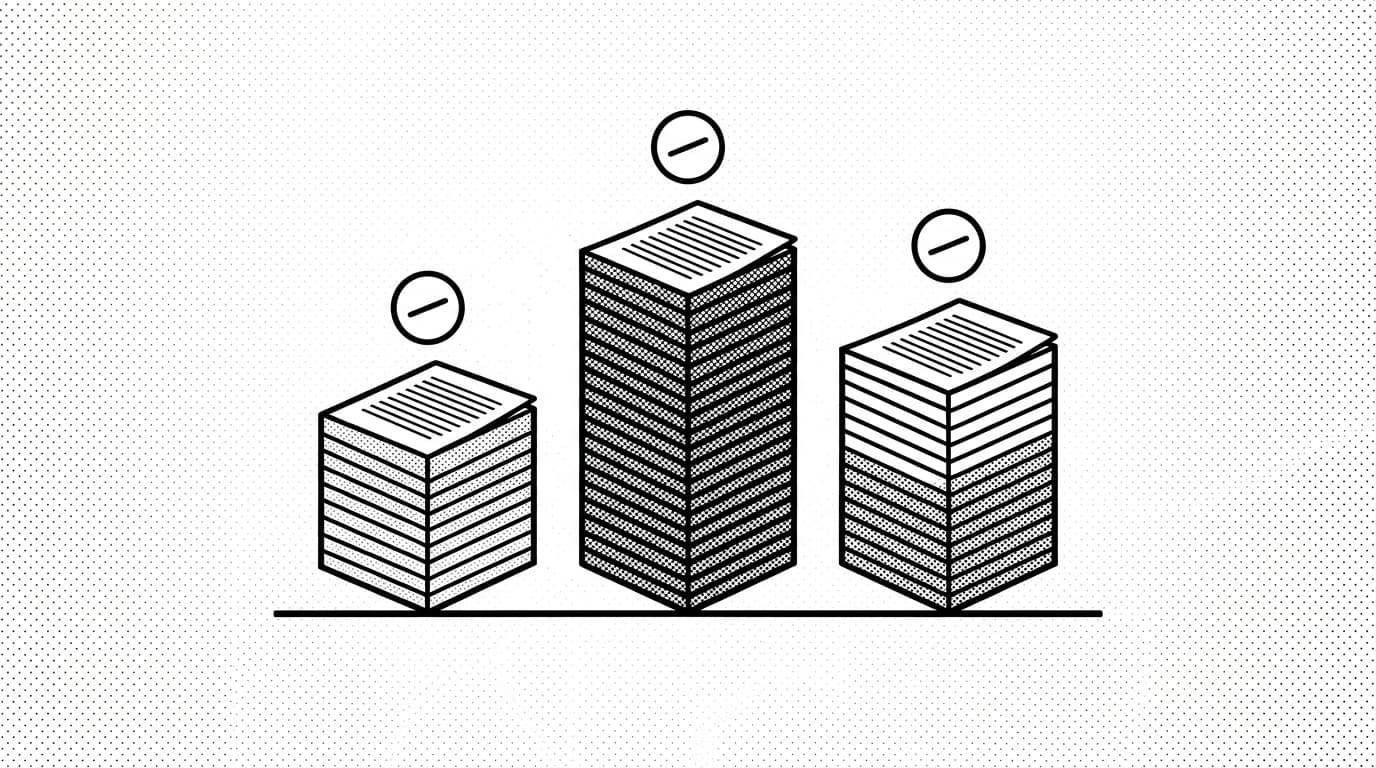
- Per-engagement uplift
- €4,500
- Renewal lift
- 67% to 92%
- Per-guide range
- $400 to $800
- Retainer range
- $800 to $1,500
The short version.
Documentation is the most under-priced deliverable in a client engagement. Agencies that bill $200,000 for a six-month build still throw the handover in for free, then watch renewals decay because the client cannot run what was shipped. Three pricing models close the gap: per-guide flat fee, per-engagement bundle, monthly retainer. Each has a different margin and renewal profile.
The under-priced deliverable in every agency engagement
Documentation is given away free in roughly nine out of ten agency engagements. The build is invoiced. The design is invoiced. The Notion page that explains how to run the thing after the team leaves is a Friday-afternoon task, written in the last billable hour and not on the SOW.
This is a pricing failure, not a documentation failure. A clean handover is the difference between a 67% and a 92% renewal rate. The agency that scrambled to write a Loom on day one-eighty has a three-month review where the client says "we could not keep it running" and goes to a competitor.
The economic gap is large. A 14-person digital product agency added a €4,500 documentation pack to its standard SOW and saw the engagement turn into a 92% renewal stream. The pack was eight to twelve guides, recorded by the team lead who built each part, the week each feature shipped.
NNGroup's research on why web users scan instead of reading maps onto client docs: the team will not read a 40-page Notion doc cover to cover. They scan, look for the answer to a specific question, and bounce. That is why visual step-by-step guides outperform written runbooks. The step-by-step guide format is built for scanning, not reading.
The next three sections compare pricing models on revenue, margin, scope creep risk, and renewal. The right model depends on three signals, covered in the final section.
Model A: per-guide flat fee
Per-guide pricing charges a fixed price per documented workflow, typically $400 to $800. A typical engagement ships six to twelve guides, generating $2,400 to $9,600 on top of the build invoice.
The margin is the highest of the three, around 75% to 82%. Recording one workflow with Capture, Scribe, or Tango takes 25 to 45 minutes. Editing adds 30 minutes. Total time per guide is 60 to 90 minutes at a fully loaded rate of $120 to $180 per hour. At $600 per guide, the agency clears $420 to $480 net.
The scope creep risk is the highest of the three. Clients ask "can you also document the deploy flow" after the SOW is signed. Without a per-guide line item, this is a free addition. With per-guide pricing, the answer is "yes, one more guide at $600." The structure makes the conversation simple, but it requires willingness to invoice the marginal guide. Agencies that flinch lose 15% to 25% of margin to scope creep.
The renewal effect is moderate. Clients pay for what they use. Roughly half of per-guide engagements convert into a monthly maintenance retainer at month four, when stale guides start showing up.
| Axis | Per-guide flat fee |
|---|---|
| Revenue per engagement | $2,400 to $9,600 |
| Margin | 75% to 82% |
| Scope creep risk | High (mitigated by clear per-unit pricing) |
| Renewal effect | Moderate; ~50% convert to retainer |
| Best fit | Engagements with 4 to 8 well-scoped workflows |
Per-guide works best when workflows are knowable at kickoff. Branding agencies, design agencies producing a design system, and consultants documenting a migration path use this model. The G2 reviews of Scribe's per-guide output confirm what clients pay for: a clean, branded, exportable artifact per workflow. Recording with Capture's Chrome extension keeps cost under an hour per guide, which sustains the 75%+ margin.
Model B: per-engagement bundled price
Per-engagement bundling rolls documentation into one line item priced as 2% to 4% of the build. On a $150,000 build, the pack is $3,000 to $6,000. On a $400,000 build, $8,000 to $16,000. The output is a fixed pack defined in the SOW: eight to fourteen workflows covering deploy, content management, integrations, and common edge cases.
The margin is solid, around 65% to 75%. The pack is scoped at SOW, recorded throughout the engagement, and bundled. A 14-person agency that ran this model added €4,500 as the average bundled line item per engagement, drawn from twelve months of work. Effort dropped from 14 hours to 4 hours per engagement because recording happened the week each feature shipped, when memory was fresh.
The scope creep risk is the lowest of the three. The pack is defined at SOW: eight to twelve guides, named, with acceptance criteria. Out-of-scope additions trigger a change order. Agencies running this model report under 10% scope creep losses, compared to 20%+ on per-guide engagements where the count is open-ended.
The renewal effect is the strongest. The same agency climbed from 67% to 92% renewal over four engagements. The pack became a sales asset. Prospects who saw it from a previous engagement asked for it before signing. Documentation moved from cost center to sales lever.
| Axis | Per-engagement bundle |
|---|---|
| Revenue per engagement | $3,000 to $16,000 |
| Margin | 65% to 75% |
| Scope creep risk | Low (defined at SOW) |
| Renewal effect | Strong; 25-point renewal lift documented |
| Best fit | 3-to-9-month builds with a clear handover moment |
The bundle converts documentation from "what we should do" to "what we sold." Pricing it inside the SOW changes three things: the client expects it, the team lead schedules it, the agency invoices for it. The same logic applies to packaging step-by-step guides as a deliverable on smaller engagements. A team using the Capture extension at $12 per seat absorbs the production cost inside the bundled price.
Model C: documentation retainer
The retainer charges a monthly fee for ongoing maintenance after the engagement ends, typically $800 to $1,500 for small clients and $2,000 to $4,000 for larger ones. The deliverable is whatever product evolution requires: re-recording guides when a UI changes, documenting new features the client team ships, refreshing screenshots when third-party tools update.
The margin is moderate, around 60% to 70%. Retainers carry overhead the per-project models do not: client communication, change tracking, monthly reporting. A $1,000 retainer covers 4 to 6 hours of work plus a 30-minute monthly check-in. Fully loaded effort cost is $300 to $400 per month, leaving $600 to $700 net.
The scope creep risk is moderate. Clients ask for "one more guide" between cycles, which is what retainers are for, but there is a hard ceiling. Agencies set a documented hour cap (typically 6 hours per month) and bill overage at $150 to $200 per hour. Retainers without an hour cap lose money inside three months because client requests grow without bound.
The renewal effect is the strongest on a per-dollar basis. A $1,000 retainer running two years is $24,000 in recurring revenue, far more than a one-off $6,000 pack. Clients almost never cancel, because rebuilding the documentation themselves costs more than the fee. Industry retention on this kind of micro-retainer runs 88% to 95% annually.
| Axis | Documentation retainer |
|---|---|
| Revenue per engagement | $9,600 to $36,000 (annualized) |
| Margin | 60% to 70% |
| Scope creep risk | Moderate (mitigated by hour cap) |
| Renewal effect | Highest; ~90% annual retention |
| Best fit | Clients with active product evolution post-launch |
The retainer is what most agencies leave on the table. The agency that priced a Capture pack at €4,500 per engagement noted that several clients later asked for a maintenance arrangement and the agency did not have one priced. Retainers convert one-off revenue into a recurring book.
How to choose: the three signals that decide
The right pricing model depends on three signals read at SOW signature. They determine which model maximizes both revenue and renewal probability.
Signal one: how scoped is the documentation universe. If workflows are knowable at kickoff (a discrete migration, a defined design system handover, a fixed-scope build), per-engagement bundling wins. If workflows are open-ended, per-guide pricing keeps margin healthy without absorbing unbounded scope.
Signal two: how active is the post-engagement product evolution. A client whose product is shipped and frozen needs a one-time pack. A client whose product evolves monthly is the perfect fit for a retainer. Ask the client what the roadmap looks like for the six months after the engagement closes. Weekly or biweekly releases is a retainer signal.
Signal three: how price-sensitive is the client. Per-guide pricing is the most transparent ("six guides at $600 each"). Bundled is easiest for a client who prefers fixed-fee certainty. Retainer pricing requires the client to understand that documentation is a product. Clients on their third or fourth agency engagement understand this; first-timers rarely do.
The three models are not exclusive. The strongest structure combines all three: a bundled pack at engagement time, a per-guide rate for out-of-scope additions, a monthly retainer offered at handover. The same 14-person agency saw its renewal rate climb from 67% to 92% and added recurring retainer revenue at month four for roughly half its clients.
NNGroup's research on how users read on the web confirms what agencies see in client portals: visual, scannable guides outperform written documentation by a factor of three or four on read-completion rates. The Capture pricing page shows the team-plan economics that make all three models work for agencies of 8 to 30 people. For agencies still evaluating tools, the best Scribe alternatives 2026 list compares the recording stacks at the same depth.
Frequently asked questions.
- What is the actual margin on each of the three pricing models?
Per-guide runs at 75% to 82%. Per-engagement bundled at 65% to 75%. Retainers at 60% to 70%. The margin gap reflects overhead: per-guide has none, bundled has SOW management, retainers have monthly check-ins and change tracking. All three clear the 50% threshold most agencies require for a deliverable to be worth offering.
- Do clients push back on per-guide pricing?
Yes, on the first engagement, and rarely after. The objection is "$600 for one guide is a lot." The counter is to show a sample guide from a previous engagement at the SOW conversation. Once the client sees the artifact, the price stops feeling abstract. Agencies that hesitate to defend the per-guide rate are the ones whose pricing erodes; agencies that anchor on the artifact hold their margin.
- How do retainers work after the project ends?
A documentation retainer starts at handover and runs at $800 to $1,500 monthly for small clients, $2,000 to $4,000 for larger ones. Scope is a documented hour cap (usually 6 per month) covering re-recording guides, documenting new features, and refreshing screenshots. Overage is billed at $150 to $200 per hour. Invoiced monthly with a 90-day initial commit. Retention runs 88% to 95% annually.
- Should documentation be a separate SOW or a line item on the build SOW?
A line item on the build SOW for per-guide and bundled models, a separate SOW for retainers. The build SOW has the engagement context that makes the scope clear. Retainers are different: they live past the build, have a different cadence, and benefit from a contract that does not auto-terminate when the build closes. Most agencies structure this as a "Documentation Pack Annex" plus a "Maintenance Retainer Agreement" signed at handover.
- What if the client refuses to pay for documentation as a separate line item?
Walk through the renewal economics. The agency that ran the documentation pack experiment saw renewal climb from 67% to 92% after pricing the pack. On a $150,000 engagement, that 25-point renewal lift is worth roughly $37,500 over the next cycle, far more than the $4,500 line item. The fallback is to bundle invisibly but make it explicit in the SOW. The lost lever is the upsell on retainers.
Ready to price your documentation deliverable instead of giving it away?
Capture turns each client workflow into a step-by-step guide in under an hour. The Team plan starts at three seats, $12 per seat per month. Agencies use it to record bundled packs and retainer guides at margin.
The Case for Step-by-Step Guides: Six Teams, One Pattern
The senior person who knows a workflow cold becomes a bottleneck. The wiki rots. The Loom nobody watches accumulates dust. Step-by-step guides break that pattern across the six teams we have watched do this in production.
Best Scribe Alternatives in 2026: Seven Tools, Honest Comparison
Scribe is fine. It is not the only choice, and for a Customer Success or IT team building a multi-language library on a sub-Enterprise budget, it is not the obvious one. Seven candidates, ranked on the criteria that matter at month four, not month one.
The Client Handover Deliverable: Agency Pillar for 2026
Most agencies treat handover as a Friday-afternoon scramble. The agencies that treat it as a deliverable, scoped at SOW and shipped as a product, hold renewals at 90% and add a quantifiable line item to every engagement.
Record one workflow.
Free Chrome extension. No signup required.